
Introduction
People will tell you that once you have an ulcer, you can never get rid of it. They’ll say things like, “If you drink gari, you’ll get an ulcer,” or “If you skip meals, hunger will give you an ulcer.” Most of the things you see on social media about ulcers are simply not true. But today, that ends. Because today, we’re going to explain ulcer properly and how to actually heal it.
What is Stomach Ulcer and How it Occur
Here’s what you need to understand. Your stomach produces acid to digest food. This acid is extremely strong; so strong that if you put a razor blade in it, it would dissolve. The acid in your stomach has a pH of about 1 to 2, which is highly acidic. If this acid touches your skin, it would burn instantly.
But the body is smart. It protects the stomach by covering it with a layer of mucus, like a smooth coating. This mucus prevents the acid from burning the stomach itself. Everything works fine as long as the balance is maintained.
Now imagine that balance breaks. Maybe the acid becomes too much, or the protective mucus becomes too thin. Once the acid begins to burn the stomach lining, it creates an open sore. That open sore is what we call an ulcer.
A stomach ulcer is literally a wound inside your stomach.
Causes of Stomach Ulcer
You should also know that ulcers are NOT caused by pepper. Research shows two major causes of ulcers:
The first is a bacteria called Helicobacter pylori (H. pylori). This bacteria weakens and destroys the protective mucus layer of the stomach, allowing acid to attack the stomach lining. You can get H. pylori from contaminated food, dirty water, or even through saliva—yes, even by sharing spoons.
The second cause is certain painkillers, especially NSAIDs—medications like ibuprofen and diclofenac. Some people swallow these painkillers like candy. Over time, these drugs damage the mucus layer and allow acid to burn holes into the stomach lining. That’s one of their major side effects.
But here’s something important: not every stomach pain is an ulcer.
Some people have acid reflux, where food and acid come back up into the oesophagus, causing burning pain. Others may have gastritis, which is inflammation of the stomach lining—not an open wound, just irritation. Some people have IBS (irritable bowel syndrome), which also causes abdominal discomfort.
So before you start shouting, “I have ulcer! I have ulcer!” ask yourself: Have you actually done a test?
The proper way to diagnose an ulcer is not by asking the internet. It’s through an endoscopy. A small camera is passed through your mouth into your stomach to check for a wound. If they see a wound, then it’s an ulcer.
After confirming the ulcer, the next step is to find the cause. Doctors will ask about your lifestyle—do you smoke? Do you drink alcohol? Do you drink unsafe water? Do you abuse painkillers? They may run tests like the urea breath test or H. pylori test, checking your stool or blood for the bacteria. The cause determines the treatment.
This is why self-medication is dangerous. You might be treating the wrong thing and making yourself worse.
Once your doctor confirms the cause, the treatment becomes clear.
If there is an ulcer, the first goal is to reduce acid. If there’s a wound and you keep pouring acid on it, it won’t heal. That’s why doctors give PPIs—they reduce stomach acid and give the wound time to heal.
If H. pylori is the cause, you must kill the bacteria completely. Treatment usually involves a combination of medications: one to reduce acid and antibiotics to kill the bacteria. But antibiotics must be taken correctly. Some of you have abused antibiotics so much that even H. pylori has developed resistance.
If you take antibiotics without reducing acid, it won’t work. If you reduce acid without taking the antibiotics, it also won’t work. You must complete the full treatment, usually for two weeks.
But medicine alone is not enough. Lifestyle matters too. Stop skipping meals. An empty stomach allows acid to act directly on the wound. Avoid trigger foods like spicy meals, excessive coffee, and alcohol. Pay attention to what irritates your stomach. Manage stress. Stress increases acid production. Try exercising, sleeping well, or speaking to a therapist. Your mental health affects your gut. And stop smoking. Smoking worsens ulcers and delays healing. You cannot heal an ulcer while continuing the habits that caused it.
How to Treat Ulcer using local herbs
Kindly find these;
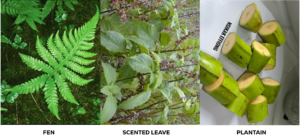
- Fresh plantain
- Scent Leaf or Wild Basil
- Fen usually seen on palm trees
Intructions/Directions
First of all, you cut the fresh plantain into pieces without remove the green coat leaves
Wash both the Fen and the scented leaves
Put all in on pot and add water.
Boil for 20-30minuites
After allow the stock to cool down for some minutes
Take 1 small disposable cup morning and evening after meal
Thank me later.